Syria Is Not Only Damascus
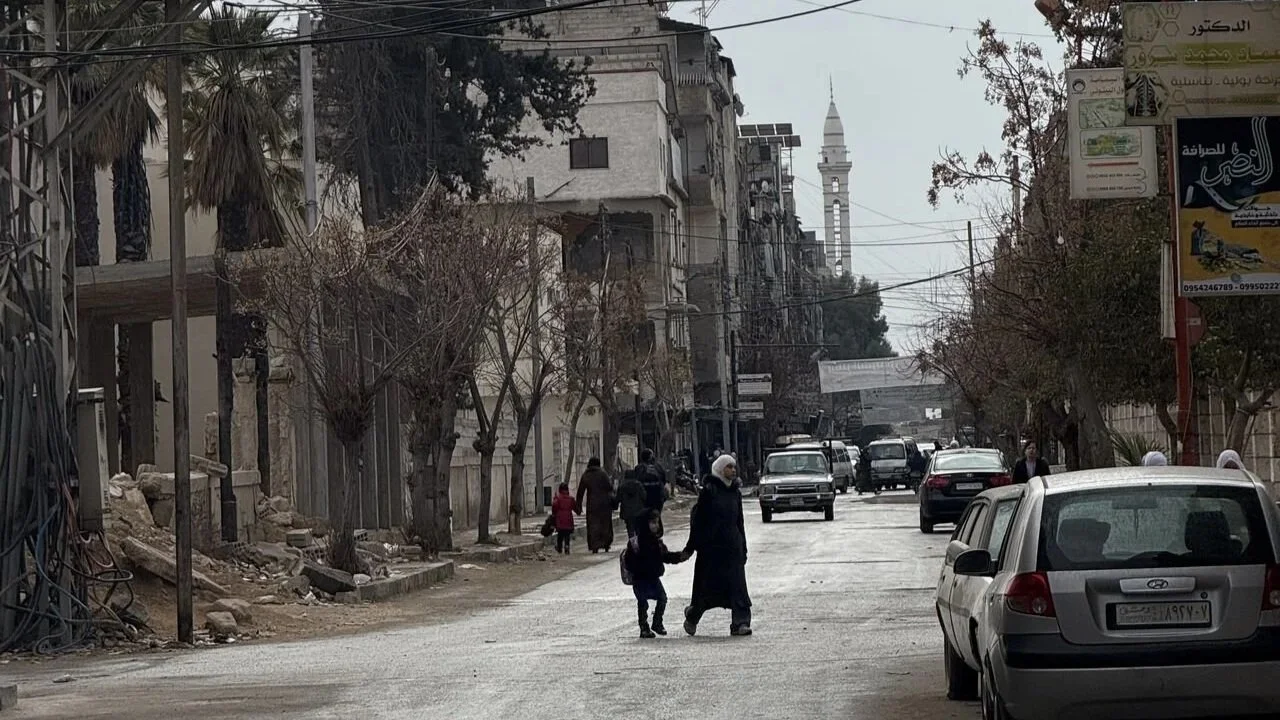
In February 2025, I travelled to Douma and South Ghouta, two areas that sit within the same governorate yet reflect very different lived realities. I went to learn about health services. I came back with a lesson about geography.
It is a short drive from central Damascus to Douma. It is a much longer distance in every way that matters to a health system.
What disability inclusion looks like when no one plans for it
In Douma I worked with the Douma Hearing Disabled Organization, and I saw how far disability inclusion still sits outside mainstream health planning. For people with hearing disabilities, the barriers begin long before a clinical encounter and extend long after it: rehabilitation services that barely exist, infrastructure that assumes a body that hears, and socioeconomic pressures that shape every aspect of daily life.
None of this appears in a mortality statistic. All of it determines whether care actually happens.
We often talk about health systems as if they were built from services: clinics, medicines, staff. Douma is a reminder that systems are also built from assumptions. When the assumption is a hearing patient, a deaf woman collecting a prescription is not underserved by accident. She is underserved by design, or rather, by the absence of design.
The same needs, a different fabric
South Ghouta complicated the lesson. On paper, the baseline needs are similar to Douma's: access to primary care, medicines, diagnostics, rehabilitation. But the social fabric, community dynamics and economic pressures are different, and so the interventions that work must be different too. What functions in one community through a local organisation may need entirely different forms of mediation a few kilometres away.
One governorate, multiple realities.
This is the essence of a protracted health system: fragmented, uneven, and deeply shaped by the social determinants of health. Years of conflict and economic decline have created pockets of resilience and pockets of profound vulnerability, often side by side. Any recovery plan that treats a governorate, let alone a country, as one uniform space will fit none of the places it is meant to serve.
The people holding it together
Across both places, one truth stood out: the burden carried by Syrian mothers and by our ageing population. For years, they have absorbed the shocks of conflict, economic hardship, displacement, and the collapse of social protection systems. They have held families together through circumstances no one should endure.
They appear in almost no dataset as what they actually are: the informal infrastructure of Syrian health. When rehabilitation is missing, a mother becomes the rehabilitation service. When social protection collapses, a grandmother becomes the safety net. A recovery that does not recognise their role, and invest in relieving it, will quietly continue to depend on it.
What this means for rebuilding
Rebuilding Syria's health system means recognising this complexity rather than averaging it away. Three implications follow from these visits, and they now shape SHEPL's research agenda:
First, equitable primary healthcare has to be planned at the level where realities differ, which is often below the governorate, not above it. Evidence that stops at the provincial average will miss the places recovery is failing.
Second, disability-inclusive services cannot be an annex to health planning. Inclusion is infrastructure: it belongs in facility design, workforce training and budget lines from the start, because retrofitting it later costs more and reaches fewer.
Third, community-driven solutions are not a romantic preference. They are a practical necessity in places where the social fabric, not the service map, decides what works. The organisations already trusted in Douma and South Ghouta are not implementation partners to be recruited at the end of a project. They are where design should begin.
Syria is not only Damascus. Health recovery must reflect the full geography of need, dignity and potential across the country. That is not a slogan for us at SHEPL. It is a sampling strategy, a research standard, and a promise about whose realities our evidence will represent.